PHP2Shell Vulnerability Analysis: Risks and Fixes for PHP Forms
The PHP2Shell (CVE-2026-109618/109619) vulnerability allows attackers to execute remote code without authentication. This article analyzes the vulnerability principles and, combined with the file upload and form submission features in your backend, provides a complete security hardening guide
S Site Admin 3 min read
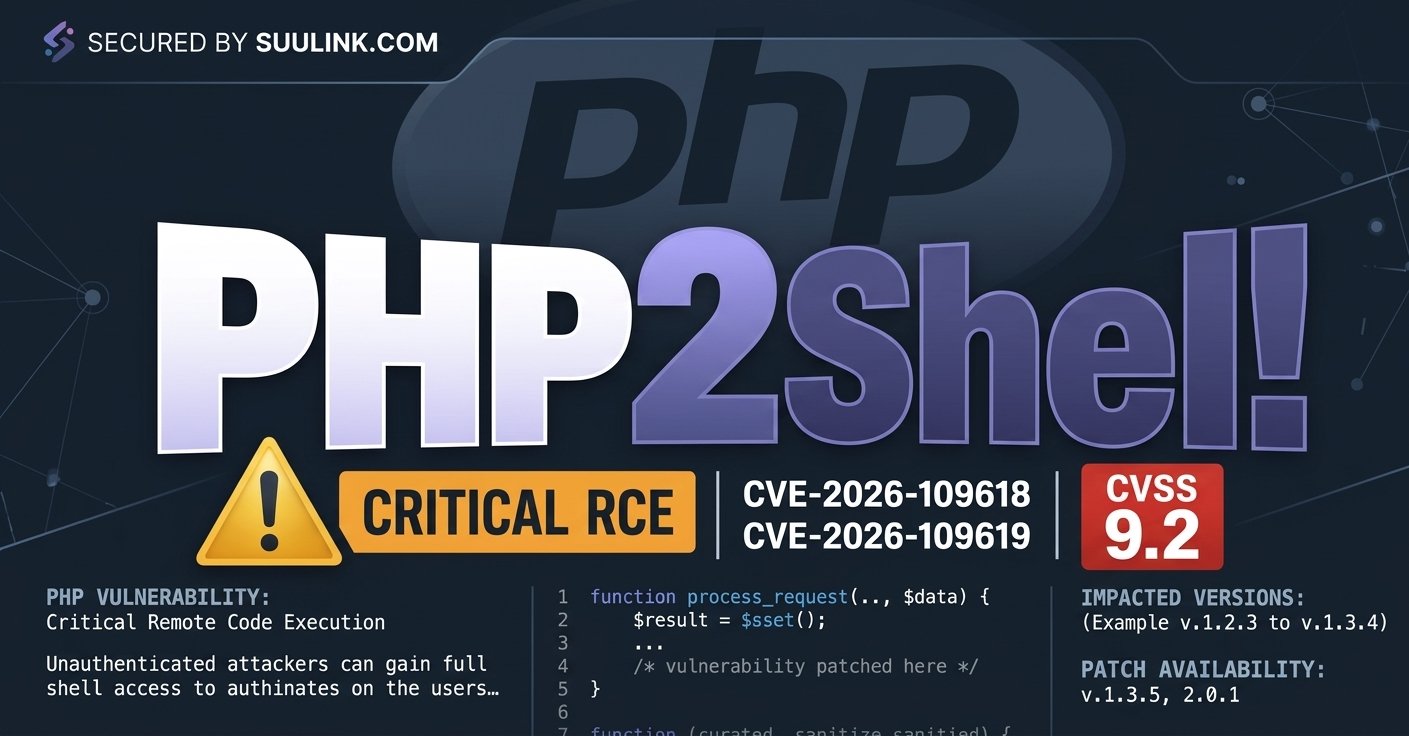
In October 2026, the PHP official team urgently released a security patch for the PHP2Shell vulnerability (CVE-2026-109618 and CVE-2026-109619). This vulnerability has a CVSS score of 9.2, and because it exists in the PHP runtime itself, even if your application code (such as the CMS system shown in the image) is written securely, as long as it runs on a vulnerable PHP version, it may be compromised . For administrators who frequently use backend forms to publish articles, the most direct threat is that attackers may exploit vulnerabilities to implant WebShell, thereby completely controlling the server.
1. Technical Analysis of PHP2Shell: Form Exploitation Chain
Combined with the backend form in the image you are using (which includes file upload and text submission functions), attackers typically exploit vulnerabilities in two ways:
CVE-2026-109618 (Memory Corruption): When PHP processes
multipart/form-datarequests (i.e., submission requests that include file uploads), if memory allocation fails, it may incorrectly handle uninitialized memory. Under themod_phpenvironment, an attacker can trigger this corruption simply by sending a carefully crafted form request, even before the application code is executed, thereby executing arbitrary commands .CVE-2026-109619 (Global State Stale): PHP workers may retain residual state from the previous request when processing subsequent requests. Attackers can exploit functions like
PHP_SESSION_UPLOAD_PROGRESS(which is enabled by default) to construct cross-request "use-after-free" attacks, ultimately achieving remote code execution .
2. Security Vulnerabilities in Form Logic Itself: File Upload Bypass
In addition to the underlying engine vulnerabilities, the "Featured image" / "Social share image" upload fields in your form, if improperly validated, can also be exploited by attackers. The "PHP Shell 2" risk you mentioned earlier often relies on these upload vulnerabilities:
Content-Type Forgery: If backend code only checks
$_FILES['file']['type'](i.e., the MIME type provided by the client), attackers can simply rename a.phpscript to.jpgand set the request header toimage/jpegto bypass detection. Once uploaded to a directory with execution permissions, the attacker obtains a backdoor .Extension Blacklist Bypass: If only
phpextensions are blocked, attackers can try.phtml,.php5, or even exploit Apache parsing vulnerabilities to use.php.jpgto execute code .
3. Emergency Response and Hardening Measures (Action Guide)
For websites running on PHP (especially those using form publishing features), please immediately follow these steps:
Check PHP Version and Patch: This is the highest priority action. Update PHP to 8.5.12, 8.4.27, 8.3.36, or 8.2.35 or higher. Note: After updating, you must restart PHP-FPM or Apache services; otherwise, the old version in memory will continue to run .
Form Upload Hardening: In the "Featured image" processing logic of your CMS, do not trust the client's file extension. Use PHP's
finfo_file()function to detect the file's true MIME type, and generate random file names for storage (avoiding user-submitted filenames), while storing the upload directory outside the Web root, or disabling PHP parsing permissions for that directory .Temporary Mitigation (If Patching Is Not Possible): If you temporarily cannot upgrade PHP, add the following to
php.inior virtual host configuration to reduce the attack surface:Set
session.upload_progress.enabled = 0(disables upload progress, blocking a key exploitation vector).Strictly limit
post_max_sizeandmemory_limit